
Branded Spaces Solutions.
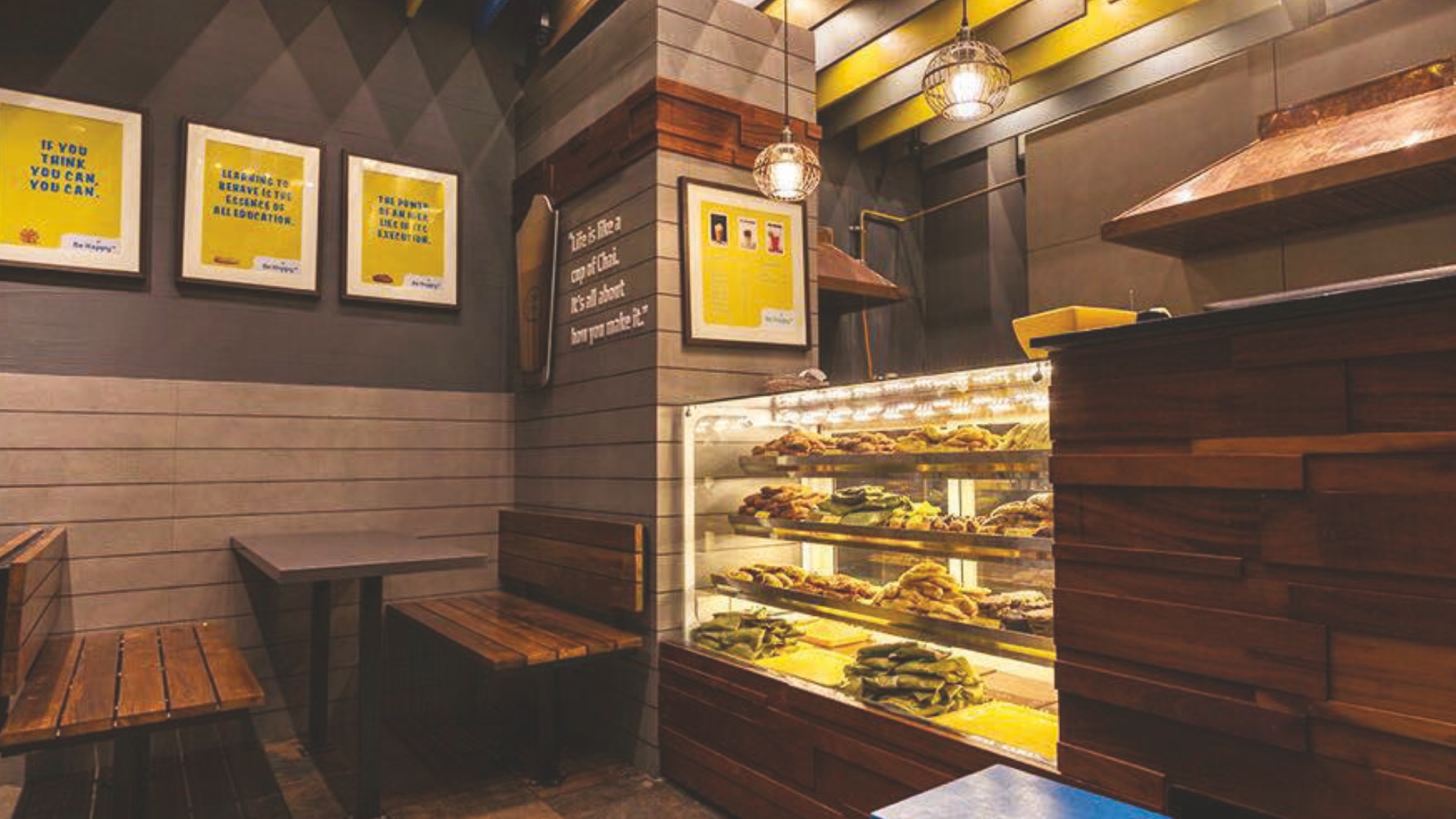
Branded Spaces are important because it decides the success and failure of all the investments in a business. For example, if the Branded Spaces fail to attract and retain customers and prospects, the entire investments fail. Branded Spaces have multiple solutions depending on the industry, category, strategy frameworks and brand frameworks.
For the sake of understanding, Brand Spaces can be classified into two segments – Branded Environments and Branded Interiors. Branded Environments is the science of handling the total environment of the brand – external and internal. Be it outdoors or indoors, Branded Environments create the same Brand Feeling.
Branded interiors are purely interior spaces that customers’ minds engage in conversations with. Different corners of a branded interior can communicate and have different conversations with different audiences of the brand.
Here are the six main Brand Spaces Solutions.
- Branded Retail Interiors
Customer Attraction focused Branded Retail Interiors is the most common among Branded Spaces you will come across in your daily life. Be it a supermarket, café, or a lifestyle store for clothing or footwear, in the modern business world it is difficult to compete without a brand and also a relevant and well-defined brand experience. Branded Spaces create unique experiences about the relevance of the brand to the customers and prospects. A decade ago, it was easy for businesses to exist with theme spaces in retail but today customer mindsets demand branded spaces as they want to take for and against positions for the brand in their everyday conversations – real and virtual. Theme Spaces are creative theme spaces often developed by architects and interior designers without taking directions from the strategists or the brand frameworks. Theme spaces focus on themes and not on the core ideology of brands. Branded environments in retail have become a necessity even in neighbourhood markets as customers are exposed to international brands Starbucks, McDonalds, Levis, Nike, Puma etc. and its branded spaces in neighbourhood markets as well.
- Brand Junctions
Brand Junction is a highly-successful concept in Branded Environments, conceived, developed and pioneered by Manoj Matthai, Founder and Strategist of The Breakthrough Group. Brand Junctions were first experimented and developed in the neighbourhood markets of India. Brand Junctions for corporate houses are developed as a part of its strategy formulation programme and then implemented after studying the Brand Frameworks of multiple brands in their stable. Brand Junctions is the convergence of multiple brands and its different sets of audience strategically so that it creates and generates a highly positive vibe and a new experience for all the brands involved without incurring brand dilutions. Brand Junctions espouse the complimentary but different brand feelings involved. Brand junctions also work out customer journeys and the customer takeouts for different audiences. The key point in creating Brand Junctions is ensuring that brand dilutions are avoided. Brand Dilution is slow poison. Brand Dilution kills even the mightiest of brands and businesses. Brand Dilution often starts internally and then spreads to external environments. Brand Junctions also fail if you try to mix different brand energies that do not blend. Experienza by the Thangal Kunju Musliar Supreme Group is a highly successful Brand Junction developed by Stori Space. The strategy to conceive Experienza as a new category – The First Food Destination Category – was conceived by &Matthai Strategy Consulting.
- Corporate Spaces
Corporate Spaces are not just spaces that list the ideology of the corporate brand, corporate spaces are energy banks that power all the brands of the corporate house. Some corporate houses acquire stature because of the history of the place like the Bombay House of the Tata Corporate. Some acquire prominence because of the iconic building architecture or interior design, like the BBC’s New Broadcasting House in central London. The whole BBC building is ‘on air’, turning the workplace into a live studio – it is now one of the world’s most televised workplaces. Corporate spaces can also be just a wall on the prominent brand space of one of its brands like the History Wall that Stori Space conceived and implemented for the Azad Corporate House in its premium restaurant chain Azad Star. Corporate Spaces can also be a brand that tells the roots of evolution of the corporate like the All Spice Destination Restaurant Stori Space implemented for the Thangal Kunju Musliar Supreme Group. Corporate Spaces are important to power the corporate Brand Experience
- Motivational Branded Offices
Motivational Branded Offices is a landmark concept of the modern business era. Motivational Branded Offices and Employee Branding came into being with quick growth of the IT industry in the service sector that employed large numbers of new age IT professionals. Motivational Branded Spaces have now caught on with not only the service industry but also with all the industries in the world. Even a small back office is turned into a Motivational Branded Office. The Branded Work Spaces are done to espouse the core brand ideology, to express brand attitudes and to ensure brand alignment. Motivational Branded Spaces help companies acquire the right talent, retain them and create a loyalty mindset in them for the company. Motivational Branded Spaces increase productivity, efficiency and team work.
- Malls, Campuses & Institutions
Be it malls, hospitals, schools, universities or museums, Branded Environments play a lead role in their success by helping them step out into the future when new competitors fight for their audience. Branded Environments also help these large projects in acquiring the right audience that spread their vision to the world at large. Branded Way Finding Solutions also plays a very important role in such large projects.
- Efficient Branded Factories
Branding of Factories is not a new concept. Branded Factories help workers stay united and on the course in delivering a great output for the factory. Branded factories are mainly done to improve productivity, efficiency and comradery. Branded Factories also play a big role in bringing about a safe work environment in every industry. It also brings about a commitment for the workers to their jobs and also to the team and company that they work for. If done rightly, it sends out a message of belonging to the right community.
What are Brand Spaces?
Brand spaces are realms of experience where customers can encounter the brand first hand. These spaces can be real as well as virtual platforms. They are used to present, stage, or develop a brand in customer-centered ways. The aim of a brand space is not just to boost sales, but to let customers experience the brand and increase their involvement with it. These brand touchpoints are about strengthening customer loyalty or involving the customer in the evolution of the brand.
There are different types of brand spaces:
- High sales focus, low involvement and experience:
This category includes the typical flagship stores many brands offer at selected locations. One example is “Niketown”, the flagship store of the US sporting goods manufacturer Nike.
2. High sales focus, high involvement and experience:
This type includes so-called pop-up stores – special sales areas that are set up for a limited time in shopping centers or pedestrian malls. They often present the brand and offer only a few core products or seasonal items for sale.
3. Low sales focus, low involvement and experience:
These days, many brands establish museums, such as Porsche or Ritter Sport. They convey a comprehensive and in-depth look at the history and origins of a brand, but frequently do not offer elements for experiencing and trying the brand. These spaces do not focus on selling the product; sales are intended to be a consequence.
- Low sales focus, high involvement and experience:
This is where a brand is brought to life to be experienced, perhaps through many tactile elements – but direct sales are not the focus (as also in the previous category). Examples of such spaces are BMW World or the Nivea House. At BMW World, visitors can directly experience the brand through simulations or test drives. Nivea expresses its brand core value “Care” by offering massages and other treatments at the “Nivea House”.
[Source of Brand Spaces Definition: Brand Trust]